

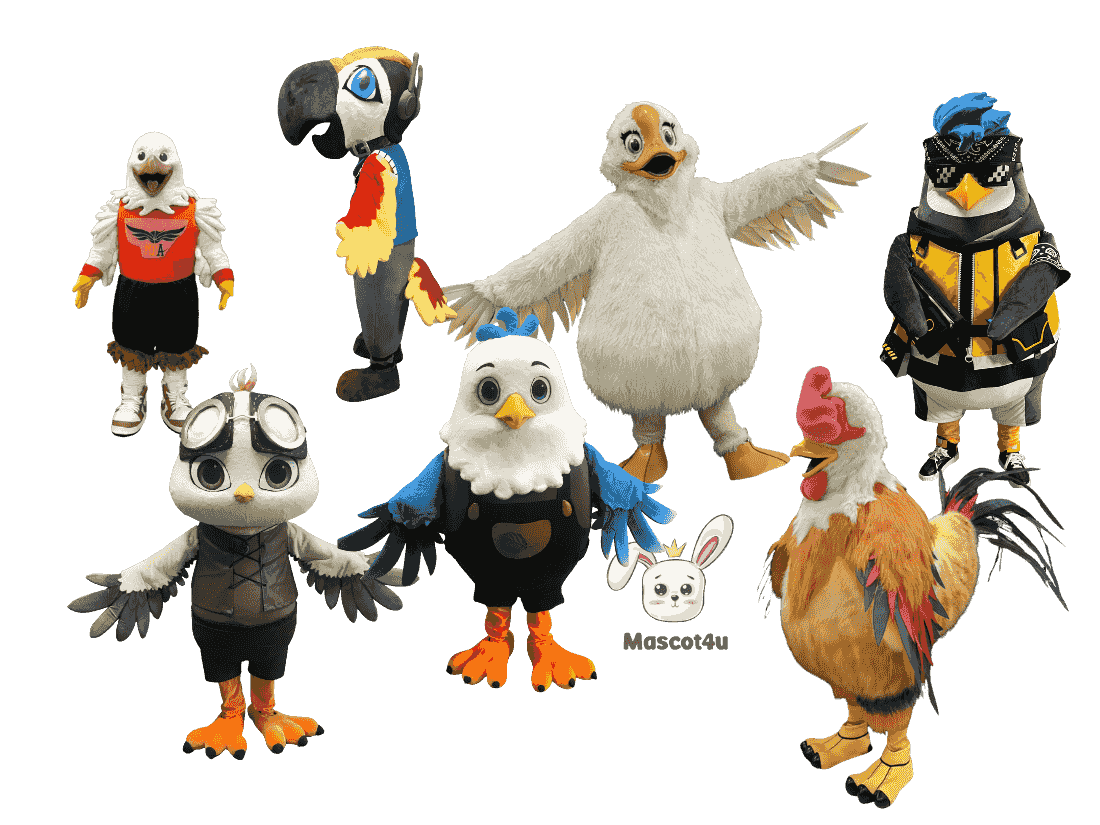
Some of the most memorable public spaces are places that give people an easy reason to gather, interact, take photographs, or share a moment. A recognizable mascot can help create that kind of welcoming experience.
A mascot may appear as a fixed installation in a shopping center, an interactive performer at a school event, or a recurring character during community activities. Whatever the format, it gives people a visual focal point that encourages interaction and creates stronger memories.
Large Installations Create Visual Landmarks
In spacious environments such as atriums, exhibition halls, entertainment venues, and public event areas, visitors often rely on strong visual cues. A large character can serve as both a decorative centerpiece and an informal landmark that helps people identify a particular area within a busy space.
A giant mascot sculpture can work especially well when a smaller display might disappear within the surroundings. Its design should consider floor space, ceiling height, entry points, visitor movement, and whether the structure needs to be produced in sections for easier installation.
A Character Can Create Continuity Across Events
Fixed displays are only one way to use a mascot. Wearable characters can bring the same visual identity into sports days, open houses, celebrations, promotional activities, and community events, allowing organizations to use one familiar character in several settings.
Schools are a good example. Well-designed mascot costumes for schools can appear at athletic competitions, orientation days, family activities, assemblies, and other campus occasions. The performance style may change, but the character remains recognizable to students, parents, staff, and visitors.
Match the Format to the Interaction
A sculpture and a wearable costume perform different roles. A large statue can remain in one location, provide a dependable photo spot, and act as a visible feature even when no event is taking place. A costume can move through a crowd and respond directly to people.
Organizations should consider the interaction they want. A permanent display can establish a recognizable location, while a live mascot can appear during selected events, launches, celebrations, or seasonal activities.
Safety and Practicality Shape Creative Decisions
Creative ideas work best when practical requirements are considered from the beginning. Large installations need stable construction, suitable positioning, and enough surrounding space. Wearable mascots need comfortable movement, adequate visibility, appropriate footwear, and planned breaks for the performer.
Event teams should also consider how people may gather around the mascot. If visitors are likely to stop for photographs, the area should provide enough room without blocking entrances or walkways. Good planning keeps the experience enjoyable while helping the venue remain organized.
Use the Mascot to Encourage Participation
A mascot becomes more meaningful when people have something to do around it. Visitors might take photographs, join a game-day tradition, meet the character during a family event, or participate in a seasonal activity. These interactions give the mascot a stronger role within the experience.
Recurring traditions can be especially effective. Students might take a photograph with their mascot during orientation and repeat it at graduation. Families may revisit a shopping center to see a seasonal character display, gradually associating the mascot with familiar occasions and shared memories.
Maintain Visual Consistency
If the same character appears as a sculpture, costume, graphic, or merchandise, its most recognizable elements should remain consistent. Colors, facial expressions, clothing, proportions, and distinctive accessories can help people identify the mascot regardless of the format in which it appears.
Creating simple visual guidelines can help. Organizations can document important colors, shapes, clothing details, and character features before producing different versions. This reduces unnecessary variation and supports a consistent identity across events, displays, printed materials, and digital platforms.
Keep Branding Balanced
Mascots already carry a strong visual identity, so the surrounding area does not need to be filled with logos or promotional messages. A carefully positioned emblem, school initials, uniform detail, or recognizable brand color can often communicate enough without making the environment feel overly commercial.
A restrained approach can also improve photographs. When the background is visually balanced, the mascot remains the main point of interest instead of competing with excessive signage. The result can feel more natural and suitable for both organized events and casual visitor interaction.
Conclusion
Mascots can help transform large or ordinary spaces into environments with more personality and more opportunities for interaction. A sculpture can provide a recognizable landmark, while a wearable mascot can introduce movement, energy, and direct engagement during events and community activities.
The strongest results come from balancing creativity with practical planning. Scale, safety, movement, visual consistency, audience interaction, and repeated use all matter. When these elements work together, a mascot can become a familiar part of shared experiences rather than simply another promotional display.